
Aburi Craft Village Guide: Thoughtful Shopping, Woodcarving & Day-Trip Planning
The short answer: Aburi Craft Village is a good Ghana shopping stop when you want to meet makers, ask where an object comes from, and choose a few meaningful pieces rather than rush through a souvenir list. Akuapim South Municipal Assembly identifies Aburi Craft Village among the area’s tourism attractions, and the Bank of Ghana’s tourism guide lists it as an Eastern Region craft centre. Treat it as a working place, not a fixed mall: confirm current opening, participating workshops, prices, photography rules, and payment options before you travel, then give yourself enough time for greetings and honest conversation.
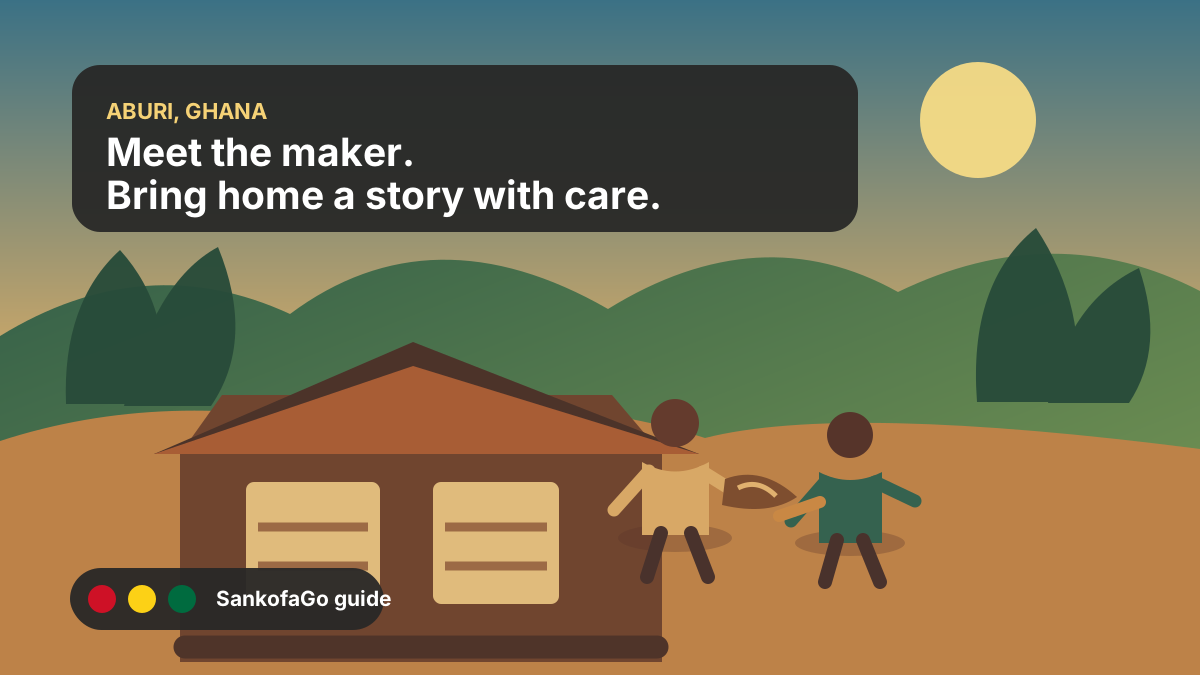
What Aburi Craft Village is—and what kind of visit it suits
Aburi Craft Village is on Ghana’s Akuapem Ridge in the Eastern Region, in an area better known to many visitors for the Aburi Botanical Gardens. The local assembly lists both among its tourism landmarks, while a Bank of Ghana tourism guide identifies Aburi Craft Village as a craft centre. That makes it a sensible addition to an Accra–Aburi day, but it should not be sold as a guaranteed, uniform retail experience. Individual makers, stock, workshop activity, access, and opening arrangements can change.
The strongest reason to go is not to find the cheapest possible version of every Ghanaian object. It is to slow down enough to ask about materials, process, design, use, and care. A good visit may leave you with one carving, small home object, or gift—and a clearer sense of the person and skill behind it. Travelers with an interest in craft, homecoming gifts, design, or a gentler day outside Accra are usually a better fit than anyone trying to complete a long shopping list in twenty minutes.
- Best for: a thoughtful craft-shopping stop, a family-friendly Aburi day, or an itinerary with room for conversation.
- Not a promise of: fixed hours, every workshop being open, a particular product, card acceptance, shipping, demonstrations, or permission to photograph.
- Search-intent match: visiting Aburi Craft Village and buying respectfully—not a substitute for the existing Aburi Botanical Gardens guide or a general Ghana souvenir-shipping guide.
Start with a greeting, then ask about the work
A craft purchase is more useful when you understand what you are looking at. Begin with a greeting and ask whether it is a good time to browse. If a maker is available, simple questions can open the right kind of conversation: Did you make this piece here? What material is it? How should it be cared for? Is the pattern or form associated with a particular use or story? Is there anything you would prefer visitors not to photograph or copy? Let the answer guide the exchange rather than arriving with a script about what Ghanaian art should mean.
Be precise about your needs without turning them into pressure. Say if the item is a gift, if you have limited suitcase space, if you need something sturdy, or if you are considering a larger order. If an object is not ready, a maker does not offer custom work, or the price is beyond your budget, thank them plainly. The goal is a fair conversation, not a performance of cultural familiarity.
The same habits apply across Ghana’s craft routes. Our Bonwire and Adanwomase Kente guide, Ntonso Adinkra guide, Sirigu pottery guide, and Accra Arts Centre guide can help you choose a craft stop that matches your interest. Each place has its own practices and makers; avoid treating them as interchangeable stops on a shopping circuit.
How to buy with care without making the exchange awkward
Prices reflect time, material, skill, finishing, and the seller’s own costs—not only the traveler’s comparison to an online listing. Ask the price, take a moment to consider it, and make one respectful counteroffer only if bargaining seems welcome. If the answer is no, decide whether the object is worth the stated price. Repeatedly pushing a maker to justify a price, or comparing their work to a mass-produced lookalike, rarely produces a good outcome for either person.
Before paying, confirm exactly what is included. Ask whether the item is ready to carry, whether any stand, frame, wrapping, or protective layer is included, and whether a receipt or contact method is available. For a larger purchase, clarify the final amount, timing, collection point, delivery arrangement, and what happens if the piece is damaged in transit. Do not assume that a workshop can ship internationally, accepts a particular payment method, or can reproduce an object by a deadline.
Mid-article planning note: use /plan to ask Nana for an “Aburi gardens and craft day.” Share your dates, starting point, group size, shopping priorities, luggage limits, children or mobility needs, photography plans, and whether you want a calm half-day or a fuller Akuapem route. SankofaGo can shape a realistic transport and timing request; makers decide their own availability, prices, payment, commissions, and photography permissions.
Photography, copying, and cultural respect
A workshop can look wonderfully photogenic, but the people, tools, works in progress, and designs are not automatically public content. Ask before photographing a maker, their hands, a child, a work area, or a close-up of a design. Ask again before filming, using a tripod, bringing a commercial camera crew, or posting a maker’s name and location. A yes to a wide shot is not necessarily a yes to a detailed video or social-media campaign.
If a maker explains that a motif has a personal, family, ceremonial, or community meaning, receive that as an invitation to learn—not a licence to reproduce it on merchandise. Avoid requesting sacred-looking symbols merely because they photograph well. Buy objects you can explain honestly, credit makers when you share their work online if they consent, and do not represent a factory-made item as handmade or locally produced.
For the wider etiquette that makes these conversations easier, see our Ghana Travel Etiquette guide and Ghana Photography Etiquette guide. Their core advice is simple: greet first, ask clearly, accept a no gracefully, and do not let a visitor’s schedule outrank another person’s workday.
Build an Aburi day that leaves room to browse
Aburi works best when you do not force it to carry a full Accra itinerary. The Forestry Commission’s ecotourism handbook places Aburi Botanical Gardens about 32 kilometres north of Accra and notes its hill-country setting; the National Commission on Culture also describes the gardens as an educational and aesthetic attraction in the Eastern Region. Use those references as orientation, not a live travel-time guarantee. Traffic, weather, your hotel location, road conditions, and stops en route all change the day.
A calm structure is often enough: leave Accra with daylight, visit the craft village at a pace that allows real browsing, take a meal break, and add the gardens or another confirmed local stop only if the group still has energy. If craft shopping is your priority, schedule it before luggage, hunger, and a fixed return time make everyone impatient. If you are traveling with elders or children, agree on shade, rest, toilets, meals, and the amount of walking before leaving Accra.
Our Aburi Botanical Gardens Day Trip guide covers the gardens in more depth. Pairing the two can work well, but do not assume that a craft stop must happen on the same day. A shorter, well-paced visit often leads to better conversations and better choices than an overfilled excursion.
Packing, payments, and taking your purchase home
Bring a reusable bag, a tape measure or your suitcase dimensions if you are considering something large, and a little patience for deciding. Cash is often useful for small purchases in Ghana, but payment practices vary, so confirm current options rather than relying on an old review. Keep an agreed purchase in sight until it is wrapped, and photograph the item and any receipt for your own records only after asking if photography is welcome.
For wood, fragile items, food products, animal-derived materials, plants, or anything that could raise import questions, check the rules of your destination country before buying. Ghana’s own departure and customs processes are separate from the rules where you land. Our Ghana Souvenir Shipping guide and Ghana Customs Rules for Travelers guide can help you prepare questions, but an airline, carrier, courier, and the destination country’s customs authority are the sources that can confirm what is currently allowed.
A good test is simple: if you cannot describe the object’s material, dimensions, value, maker or seller, and transport plan, do not rush into buying it. There will be other beautiful things. The point of a craft stop is to return with a piece you are genuinely ready to care for.
Make the craft stop part of a meaningful Ghana route
Aburi Craft Village can be a gentle bridge between Accra and the Eastern Region: an unhurried morning, a chance to meet a maker, and a useful reset between airport logistics, museum days, coastal heritage, or a longer up-country route. It is especially well suited to travelers who would rather take home fewer objects with a clear story than fill a suitcase with anonymous souvenirs.
When you are ready, start your free plan at /plan and include “Aburi Craft Village” in the notes. Tell Nana whether you are buying gifts, furnishing a home, traveling with family, working with a luggage limit, or hoping to combine the visit with the gardens. SankofaGo can prepare a pace-aware trip request and confirm available transport and experiences before you pay; individual makers remain the authority on their work, access, prices, and permissions.
Frequently asked questions
Where is Aburi Craft Village?
Aburi Craft Village is in Aburi on Ghana’s Akuapem Ridge in the Eastern Region. Akuapim South Municipal Assembly lists it among the area’s tourism attractions. Confirm the exact meeting point and current access locally before traveling.
What can I buy at Aburi Craft Village?
The village is identified in official tourism material as a craft centre, but individual makers and stock can change. Ask locally what is available on the day, who made an item, what it is made from, how to care for it, and whether it is suitable for your luggage and import rules.
Is Aburi Craft Village open every day?
Do not assume a fixed public schedule. The local assembly identifies the village as an attraction, but published listings do not establish a live, universal opening timetable for every maker or workshop. Confirm before building your day around it.
Can I photograph artisans at Aburi Craft Village?
Ask first. Get clear consent before photographing people, tools, work in progress, designs, workshops, or children—and ask again for video, commercial use, a tripod, or a close-up of a specific design. Accept a no without argument.
Can SankofaGo plan an Aburi craft-shopping day?
Yes. Share your dates, group size, starting point, craft interests, shopping goals, luggage limits, and pace through /plan. SankofaGo can prepare transport and itinerary options, while individual makers set their own availability, prices, payment terms, and photography rules.
Sources & further reading
Ready to see it for yourself?
Plan your Ghana trip free with Nana, our AI planner — then our team books every car, hotel, and guide. You just confirm, pay, and go.
Start planning — it's free