
Komfo Anokye Sword Site Guide: Kumasi History, Respect & Planning
The short answer: the Komfo Anokye Sword Site is a sacred heritage landmark on the grounds of Komfo Anokye Teaching Hospital in Kumasi, central to Asante historical memory. Ghana Tourism Authority describes an over-300-year-old sword wedged in rock and presents the site as a place to learn about the beginning of the Asante Kingdom. Treat it as a place of living cultural meaning, not a quick photo stop. Ghana Tourism Authority does not publish dependable current visitor hours, admission, photography rules, or a booking process, so confirm those directly before you go and be ready to change your plan if hospital or site needs come first.
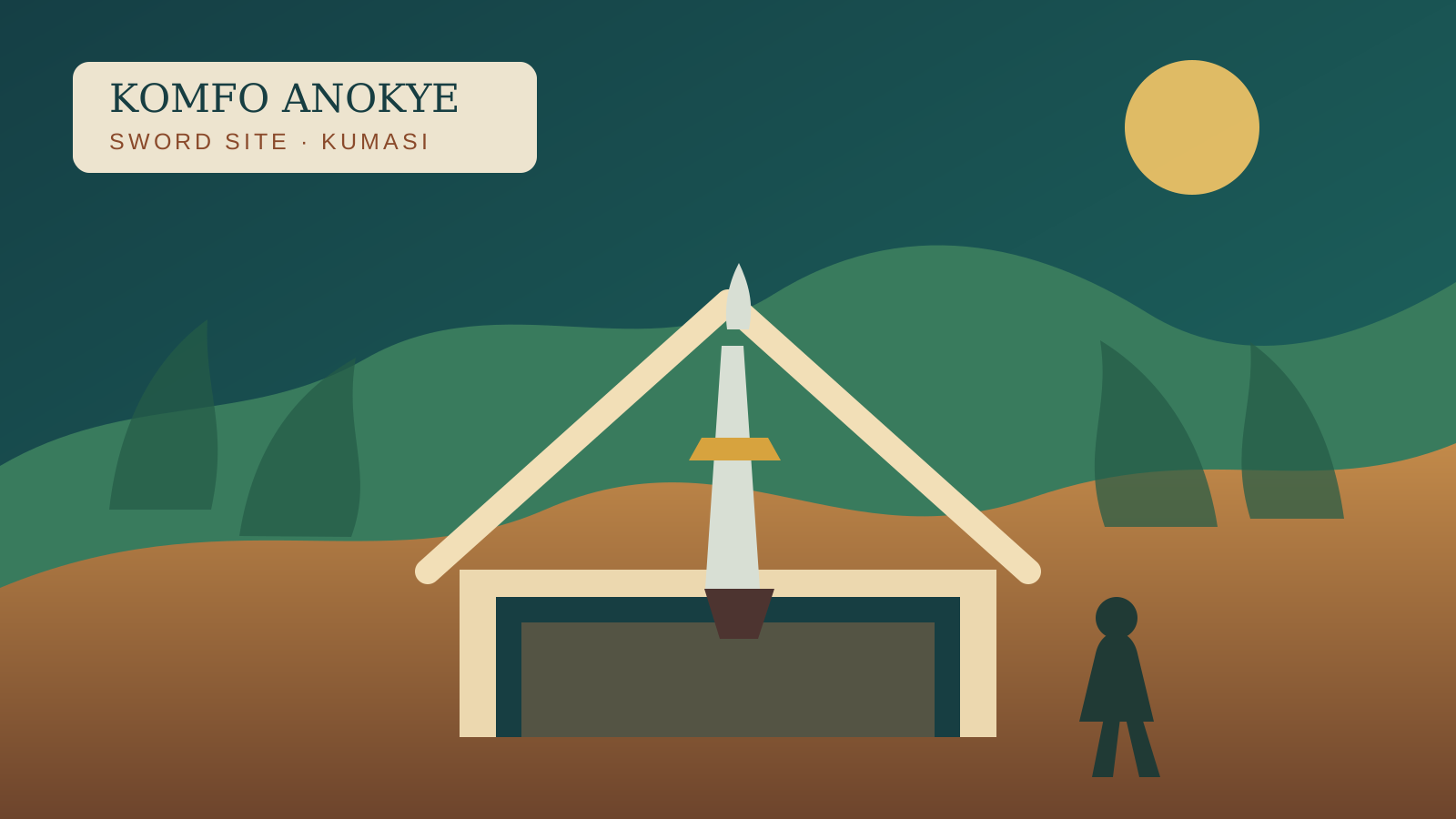
Why the Komfo Anokye Sword Site matters
For many visitors, the site is a compact entry point into a much larger Asante history. Ghana Tourism Authority calls it seminal in that history and describes the sword as one of the central artefacts and legends of the Asante nation. Its importance is not measured by the size of the enclosure or how quickly a traveler can tick it off. It is in the stories, symbols, and custodianship around it.
Ghana Tourism Authority records the tradition that Okomfo Anokye drove the sword into the ground and that the Golden Stool of Asanteman descended there onto the lap of Osei Tutu I. It also reports the belief that the sword cannot be removed. These are cultural and spiritual traditions, not a prompt to test, challenge, or reduce a sacred object to a viral stunt. Let an on-site curator or authorized guide set the frame for what is appropriate to hear and ask.
The site sits within Komfo Anokye Teaching Hospital, an active public hospital in Kumasi. The hospital says it is a 1,200-bed teaching hospital and a specialist medical centre serving patients, trainees, families, and staff. That setting changes the visitor’s responsibilities: patient movement, clinical work, security, parking, and quiet can matter more than an itinerary.
- Best for: travelers seeking an introduction to Asante history and living cultural heritage in Kumasi.
- Plan for: a short, confirmed and respectful visit—not unrestricted access to hospital grounds.
- Do not assume: fixed hours, an entry price, a guide, photography permission, toilets, parking, or accessibility arrangements without confirmation.
What to confirm before you leave
Start with the practical question: is the site receiving visitors on your date, and where should you meet? Because it is on a working hospital campus, an online map pin or old review is not an arrival instruction. Ask the relevant site contact or hospital reception for the current entrance, visitor process, suitable arrival window, fee and payment method if any, whether a guide is available, and whether your group size can be accommodated.
Ask explicitly about images. A sacred heritage site and a hospital both call for care. Permission to enter is not permission to photograph the sword, a shrine area, patients, families, staff, vehicles, wards, signs, or security features. Do not use a drone, tripod, livestream, interview setup, or commercial shoot unless you have separate written approval. If the answer is no, keep notes rather than trying to make an image anyway.
Build a little slack into the day. A hospital is not a museum precinct designed around tourist schedules. If staff redirect you, access changes, or a quiet period is needed, thank them and move to a confirmed nearby stop. A flexible plan protects the experience and the people who rely on the grounds.
How to visit a sacred site on active hospital grounds
Arrive dressed and spoken for with care. Keep voices low, follow pathways and staff instructions, and leave clinical areas, queues, and waiting spaces unobstructed. Do not touch the sword, rock, enclosure, offerings, or any other object unless the custodian clearly invites it. A respectful visit is not performative: listen closely, ask thoughtful questions, and accept that some answers, images, or spaces may not be available to visitors.
Avoid turning religious or cultural tradition into a fact-checking contest. The right question is often, “How would you like visitors to understand this site?” rather than “Can you prove this story?” Ghana’s official tourism page itself uses the language of legend, history, belief, and tradition. Preserve that distinction when you share the experience with children or post about it later.
Do not make the hospital setting part of a travel spectacle. Never photograph or approach patients, visitors, or clinical staff for content; do not block ambulances, gates, or walkways; and do not expect staff to solve a visitor issue ahead of medical work. A small heritage stop leaves a better impression when the traveler takes up little space.
Place the sword site in a thoughtful Kumasi day
The strongest Kumasi itinerary gives each heritage stop its own context instead of treating every landmark as interchangeable. Read our Manhyia Palace Museum guide at /blog/manhyia-palace-museum-kumasi-guide for royal-history planning, our Kumasi Fort and Military Museum guide at /blog/kumasi-fort-military-museum-guide for the colonial and military history held in that site, and our Ntonso Adinkra Cloth Village guide at /blog/ntonso-adinkra-cloth-village-guide for craft traditions beyond the city centre. Check each destination separately; one site’s access or rules do not transfer to another.
If your interest is the founding narratives of Asanteman, give the sword site enough emotional and practical room rather than squeezing it between a flight, a market run, and a fixed family appointment. Choose one or two additional confirmed stops, leave time for traffic and a meal, and protect daylight for movements across the city. A shorter day is often the more generous one.
For a diaspora homecoming, school group, family gathering, or first Kumasi visit, a trip brief helps connect the pieces without overpromising. Share your dates, starting point, group size, mobility needs, confirmed appointments, and any filming plans at /plan. SankofaGo can help shape transport and pacing around what is confirmed; site custodians and hospital staff decide live access and conduct.
A simple visit brief reduces avoidable friction
Before departure, note the confirmed contact, arrival window, meeting point, number of visitors, payment guidance, photo decision, and the name of a backup stop. Tell a driver the confirmed entrance rather than only the landmark name, and do not ask them to wait where hospital traffic needs to flow. Bring water for the wider city day, but avoid eating, littering, or creating a gathering where the site team does not permit it.
If you cannot verify the visit before traveling, do not treat the site as a guaranteed inclusion. Keep it as a possible cultural stop and make the rest of your day useful on its own. If access is unavailable, thank the staff, leave promptly, and return when the site can receive visitors. That patience is part of the respect the story deserves.
Frequently asked questions
Where is the Komfo Anokye Sword Site?
Ghana Tourism Authority places the Komfo Anokye Sword Site on the grounds of Komfo Anokye Teaching Hospital in Kumasi. Confirm the current visitor entrance and meeting point directly before travel because the hospital is an active campus.
What is the Komfo Anokye Sword Site known for?
Ghana Tourism Authority describes it as a landmark central to Asante history and links it to traditions about Okomfo Anokye, Osei Tutu I, and the Golden Stool of Asanteman. The authority calls the sword an over-300-year-old artefact and legend of the Asante nation.
What are the Komfo Anokye Sword Site hours and entry fee?
Do not rely on third-party listings for either. Ghana Tourism Authority’s current visitor page does not publish dependable hours, admissions, or a booking process. Confirm whether the site is receiving visitors, the current arrival procedure, any fee, and payment method directly before you go.
Can I take photos at the Komfo Anokye Sword Site?
Ask for explicit same-day permission first. Because the site is sacred and located on hospital grounds, do not assume permission to photograph the sword, shrine area, patients, families, staff, vehicles, wards, signs, or security features. Drones and commercial filming need separate approval.
Can SankofaGo help plan a Kumasi heritage day?
Yes. Start at /plan with your dates, pickup point, group size, confirmed visits, pace, mobility needs, and interests. SankofaGo can help organize the wider itinerary, while site custodians and hospital staff confirm live access, fees, guides, and on-site rules.
Sources & further reading
Ready to see it for yourself?
Plan your Ghana trip free with Nana, our AI planner — then our team books every car, hotel, and guide. You just confirm, pay, and go.
Start planning — it's free