
Sirigu Pottery & Painted Walls Guide: SWOPA, Route & Respect
The short answer: Sirigu is worth planning when you want northern Ghana culture through women-led pottery, painted earth architecture, mural symbolism, craft shopping, and slow community tourism rather than another rushed monument stop. Build the visit from Bolgatanga or Navrongo, confirm SWOPA access or workshop arrangements, bring cash, ask before photos, and check current northern-border safety advice before finalizing the route.
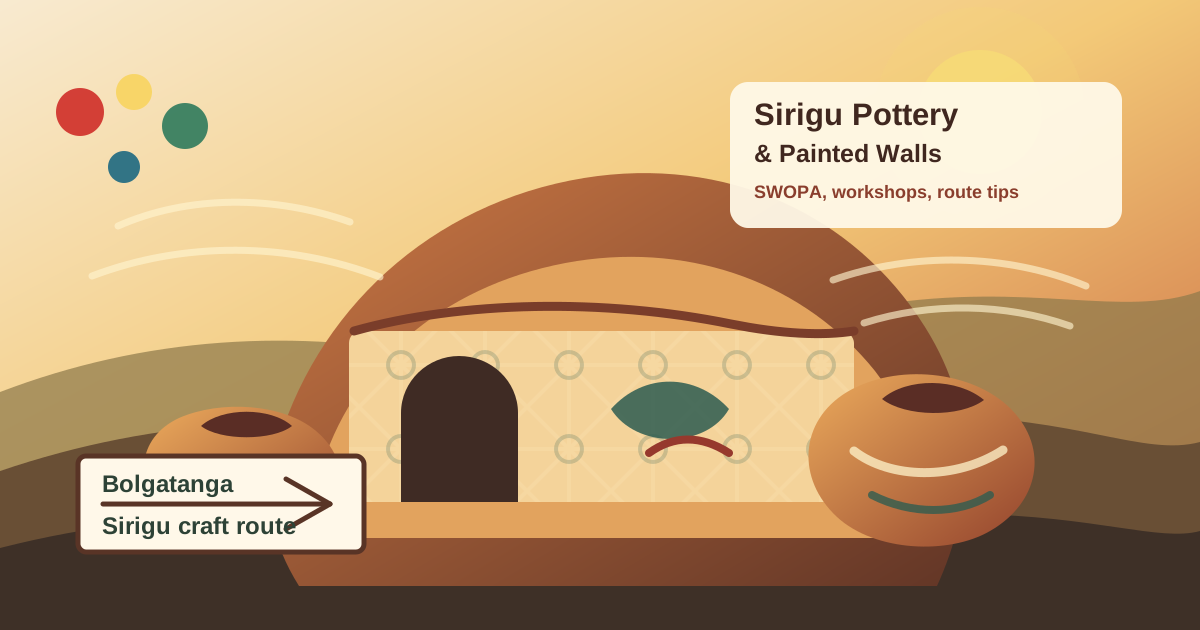
The short answer: Sirigu is a craft visit, not a souvenir stop
Sirigu answers a different Ghana travel question from Paga Crocodile Pond, Pikworo Slave Camp, Tongo Hills, Bolgatanga market, Mole safari, or SankofaGo's broader northern Ghana guides. The reason to go is not only to buy pottery. The reason is to understand how mural painting, clay work, architecture, women's organizing, and community tourism sit together in the Upper East Region.
A strong Sirigu visit needs time and humility. Travelers should confirm whether SWOPA is receiving visitors, whether a workshop or gallery visit is available, what can be photographed, whether a village tour is appropriate, and how purchases support makers. The best day feels conversational, not extractive.
- Best fit: craft lovers, architecture travelers, culture-focused families, diaspora travelers, photographers who can follow consent rules, responsible shoppers, and repeat Ghana visitors adding depth beyond the coast.
- Plan around: Bolgatanga or Navrongo base nights, current SWOPA access, workshop timing, cash for purchases, heat, respectful dress, photo permission, road conditions, and northern-border safety guidance.
- Do not assume: every mural is public for close-up photography, every workshop runs on demand, card payments will work, or Sirigu can be squeezed comfortably between Paga and Tongo without losing meaning.
- Search intent match: this is a Sirigu pottery, painted walls, and SWOPA planning guide, not a general Upper East itinerary or a Paga heritage guide.
What Sirigu and SWOPA are known for
Sirigu is best known to travelers for pottery, painted walls, indigenous architecture, basketry, and the Sirigu Women's Organization of Pottery and Art, commonly called SWOPA. Visit Ghana's Upper East Region page names Sirigu Art and Pottery Village, or SWOPA, among the region's key attractions.
SWOPA's own site presents Sirigu and SWOPA as a hub for culture and art in the Upper East, with nearby touring possibilities such as Paga crocodile ponds, Tongo Hills, and Bolgatanga. Its pottery page says members produce figurines, vases, dishes, and other clay goods, and that clay products can take several weeks to make.
For travelers, the useful takeaway is simple: this is a living craft environment, not a factory-style shopping stop. If you care about who made the work, how it is used locally, and what kind of time is behind it, Sirigu gives the route a slower and more human texture.
Why the painted walls matter
A UNESCO cultural heritage and local development case study describes Sirigu as a northern Ghana village long known for decorated architecture with symbolic patterns that represent local culture. The same document says this traditional knowledge has been preserved by women in rural areas near Sirigu, even as it has been at risk closer to urban centres.
That matters for visitors because the painted wall is not merely a decorative backdrop. It is part of a built environment, a social memory, and a women-led knowledge tradition. A respectful traveler does not treat someone's compound wall like a public studio set.
The UNESCO case study also links the revival of Sirigu art to women consolidating their autonomy through SWOPA, selling art, pottery, and baskets in national and international markets, and teaching traditional art to local schoolchildren. That is exactly the kind of cultural economy travelers should approach with care.
How to visit without making people feel observed
Good Sirigu etiquette is simple but important: ask before photographing people, homes, doorways, tools, workshop processes, or children. If a guide says a space is private, treat it as private. If someone is making work, do not interrupt the rhythm only for a photo.
Buy with respect too. Bargaining culture exists in Ghana, but handmade pottery, wall-art work, baskets, textiles, or gallery pieces should not be reduced to a game of squeezing the last cedi. Ask about the maker, the use of the item, how to pack it, and whether a larger piece can travel safely.
If you want a workshop, demonstration, or deeper conversation, arrange it before the day when possible. A village cannot always reorganize skilled people, materials, meals, translation, and timing just because a traveler arrived with a camera and a tight schedule.
Route planning from Bolgatanga, Navrongo, Tamale, or Paga
For most travelers, Sirigu fits best inside an Upper East chapter based around Bolgatanga or Navrongo. Visit Ghana describes Bolgatanga as the Upper East regional capital and names the region as Ghana's northeastern gateway from Burkina Faso and Togo. That regional context matters: Sirigu is not an Accra day trip.
A practical route might pair Sirigu with Bolgatanga baskets and a quiet meal, or place it on a separate day from Paga and Pikworo so the craft visit has room to breathe. A more ambitious route can include Tongo Hills, Sirigu, Paga, Navrongo, and Mole National Park, but only if the itinerary protects daylight, lodging, guide timing, and traveler energy.
Mid-article planning note: start at /plan and ask Nana for a "Sirigu pottery and painted walls route." Share your base city, dates, group size, craft-shopping goals, workshop interest, photo needs, children or elders, and whether you want Bolgatanga, Paga, Pikworo, Tongo, Tamale, or Mole in the same northern Ghana chapter.
Safety and season checks for the far north
Sirigu planning should include current security advice because northern Ghana routes can sit close to changing regional risks. The U.S. Department of State Ghana advisory dated July 7, 2026 tells travelers to exercise increased caution in Ghana and to reconsider travel to the northern border in the Upper East Region, Northeast Region, Upper West Region, and parts of the Savannah Region due to crime.
GOV.UK says terrorist attacks in Ghana cannot be ruled out and specifically notes groups operating in neighbouring Burkina Faso near Ghana's northern border. It also warns that flooding can disrupt road travel and services during the rainy season in several northern regions, with conditions changing quickly after intense rainfall.
That does not mean every northern route is off the table for every traveler. It means the plan should be current, local, daylight-first, and honest. Use reputable transport, avoid improvised night driving, confirm local conditions close to travel, and leave room to change the route if advice or ground conditions shift.
What to bring and what to ask before you go
Bring cash in small notes, water, sun protection, modest lightweight clothing, comfortable shoes, a charged phone, a soft bag for purchases, and patience. If you plan to buy pottery, ask how fragile the piece is, whether it can be wrapped for road travel, and whether it is decorative, functional, or ceremonial.
Ask practical questions early: Is SWOPA open to visitors on your date? Are workshops or village tours available? What are the current charges? Is food available nearby? Are photos allowed in the gallery, workshop, or compound areas? Can the visit be paired responsibly with another stop without rushing?
If you are bringing children, brief them before arrival: do not touch items without permission, do not run through homes or workspaces, and do not point cameras at people without asking. That small preparation changes the tone of the whole visit.
How SankofaGo can help
Sirigu is exactly the kind of stop that benefits from careful sequencing. The value is not only reaching the village. It is arriving at the right time, knowing what to ask, leaving enough buying and conversation time, and deciding whether the day should also include Bolgatanga, Paga, Pikworo, Tongo, or Navrongo.
SankofaGo can help compare a craft-focused Upper East day with a broader northern Ghana route, coordinate driver timing, shape realistic pairings, and brief the group on photo etiquette, cash, heat, workshop expectations, and safety checks before travel.
When you are ready, compare support levels at /pricing, then use /plan with "Sirigu pottery and painted walls" in your notes. Tell Nana whether you want a craft-shopping day, a workshop-led visit, a Bolgatanga-and-Sirigu culture route, or a wider Upper East loop designed around respect and daylight.
Frequently asked questions
Where is Sirigu in Ghana?
Sirigu is in Ghana's Upper East Region, usually planned from Bolgatanga or Navrongo rather than Accra. It fits best inside a northern Ghana route with enough time for roads, heat, local guidance, and daylight movement.
What is SWOPA in Sirigu?
SWOPA is the Sirigu Women's Organization of Pottery and Art. Travelers know it for women-led pottery, painted-wall traditions, craft work, gallery-style visits, and community tourism in the Upper East Region.
Can visitors buy pottery in Sirigu?
Yes, pottery and other craft purchases may be possible, but travelers should bring cash, ask about maker context and packing, and confirm current visitor access before building the itinerary around a shopping stop.
Are Sirigu painted walls okay to photograph?
Only photograph with permission. Painted walls may belong to homes, compounds, workshops, or community spaces, so ask a guide or host before taking close-up photos, portraits, or video.
Can Sirigu be paired with Paga or Tongo Hills?
Yes, but it should not be rushed. Sirigu can pair with Bolgatanga, Paga, Pikworo, Tongo Hills, or Navrongo when the route protects daylight, local timing, heat breaks, and the purpose of each stop.
Is northern Ghana safe for a Sirigu visit?
Check current advice before travel. Recent U.S. and UK guidance flags risks around Ghana's northern border areas and regional weather disruptions, so Sirigu routes should use current local information, reputable transport, and daylight-first planning.
Can SankofaGo plan a Sirigu craft route?
Yes. SankofaGo can place Sirigu inside a realistic Upper East itinerary, compare pairings, plan driver timing, brief your group on etiquette, and shape a craft or culture day around your interests.
Sources & further reading
- Sirigu Women's Organization of Pottery and Art - Why Come to Sirigu
- Sirigu Women's Organization of Pottery and Art - pottery and gallery context
- UNESCO World Heritage Centre document - Cultural Heritage and Local Development, Sirigu case study
- Ghana Tourism Authority / Visit Ghana - Upper East Region
- U.S. Department of State - Ghana Travel Advisory
- GOV.UK - Ghana safety and security travel advice
Ready to see it for yourself?
Plan your Ghana trip free with Nana, our AI planner — then our team books every car, hotel, and guide. You just confirm, pay, and go.
Start planning — it's free